

Cambridge Centre for Alternative Finance
At the Cambridge Centre for Alternative Finance we study alternative finance, including financial channels and instruments that emerge outside of the traditional financial system.
Who we are
The Cambridge Centre for Alternative Finance (CCAF) at Cambridge Judge Business School was established in January 2015 to conduct cutting-edge, interdisciplinary, rigorous and independent research on the development of alternative financing instruments, channels and systems, as well as related socio-economic, regulatory and policy implications.
Our team of researchers, experts, technologists and educators share the CCAF’s mission to accelerate the creation and transfer of knowledge that pushes the boundaries of research, catalyses the sustainable development of financial innovation and informs evidence-based regulation.

What we do
We collect empirical and high-fidelity data from both alternative finance / fintech market stakeholders as well as from regulators, policymakers and supervisors of digital financial services. We have a data-driven and digital-first approach for research. We aim to:
- identify frontier global trends in fintech
- understand evolving business models enabled by technological innovation
- analyse the socio-economic impact of digital financial services
In addition to academic output and research reports, we also produce open-access public digital tools to better visualise data and disseminate knowledge, as well as deliver impact-driven capacity building and educational activities at scale.

Research
The CCAF is forging a cutting-edge, multidisciplinary and collaborative research agenda in:
- The development of alternative financing instruments, channels and systems that emerge outside of the traditional financial ecosystem.
- The emergence of digital assets / digital money and associated business, regulatory and climate implications.
- Fintech regulation and approaches to regulatory innovation.
- Supervisory technology its application in financial authorities.
- The development of digital market and regulatory infrastructure for instance in open banking and open finance

Publications
Our faculty, research associates and research affiliates publish and create a wide range of high-impact work – from peer-reviewed academic papers, high-profile industry reports, cutting-edge regulatory and supervisory studies as well as open-access and scalable digital tools. This body of work extends the boundaries of knowledge while promoting the collaboration and engagement with a community of academics, practitioners, business leaders, policymakers and regulators.

Courses
We provide innovative and engaging capacity building and education courses for central bankers, regulators, supervisors and policymakers as well as for corporate and institutional partners. The CCAF is currently offering executive education courses on fintech and regulatory innovation, supervisory technology, digital assets and soon open finance. To date, the CCAF executive courses have trained more than 2,000 regulators and policymakers from 315 financial authorities in over 145 countries.
Our impact
Since our founding in 2015, we have published over 50 high-impact and high-profile fintech market and regulatory reports in collaboration with more than 5,000 fintech firms in 195 jurisdictions as well as 130 central banks and other financial regulators. The Centre has created a suite of scalable digital tools, such as the Cambridge Bitcoin Electricity Consumption Index (CBECI), accessible through our digital platform CCAF.io.
The CCAF currently is offering four world-class capacity building and training courses which have trained more than 2,000 regulators and policymakers from 315 financial authorities around the world. Our research has been cited, referenced and utilised widely by academic researchers, as well as business and regulatory communities around the world.
For selected academic, regulatory and policy impact citations:

News and insights from CCAF
Read the latest news and insights from Cambridge Centre of Alternative Finance.

Research centre news
Paying for Bitcoin’s security as the subsidy fades
The Cambridge Centre for Alternative Finance has published Funding Bitcoin's Future, a study examining how network security will be funded as the programmed block subsidy falls toward zero. The report analyses fee market dynamics, evaluates attack economics, and introduces a framework to monitor security budget health over time.
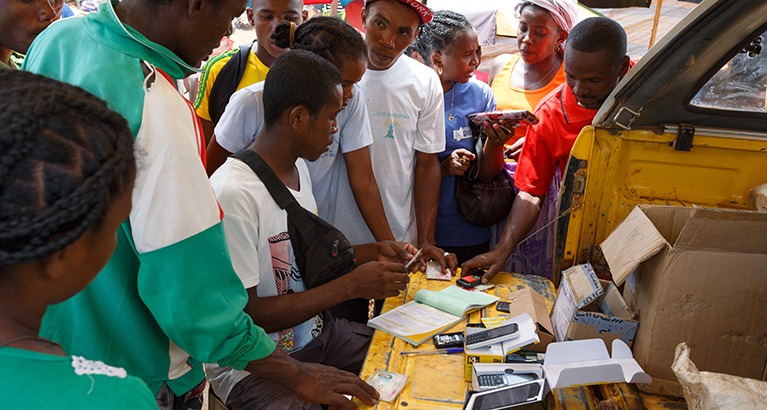
This article, by Pavle Avramovic, Gabriella Gebri and Aishwarya Viswanathan, examines the governance challenges shaping the next generation of digital identity systems. Based on cross-regulatory dialogues in Uganda and Ethiopia, it explores how stronger coordination, interoperability, and trust can unlock the full potential of digital identity and e-KYC across sectors.

Research centre news
New global survey maps e-KYC and digital ID adoption
Financial Innovation for Impact (Fii) in collaboration with the Cambridge Centre for Alternative Finance (CCAF), has launched the Global e-KYC Landscape Study. It captures intersecting perspectives of public authorities, regulators and supervisors, and industry (fintechs, banks, other financial institutions and digital ID service providers) via 2 parallel surveys. The resulting insights will provide a holistic view of e-KYC landscape and adoption dynamics today.
Foundational funders: